
Flat roofs — technically any roof with a pitch below 5° — are common in Polish multi-family residential blocks (bloki), commercial buildings, and increasingly in modern single-family houses seeking a minimalist profile. Unlike pitched roofs, flat roofs require a carefully engineered waterproofing system because water cannot rely solely on gravity and slope to drain quickly.
Poland's climate introduces specific stresses for flat roofing: sub-zero temperatures in winter, rapid freeze-thaw transitions in spring and autumn, and occasional heavy rainfall in summer. This article describes the main membrane types used in Polish flat roof construction and the most commonly observed failure modes.
Bitumen Membrane Systems
Modified bitumen membranes (papa termozgrzewalna) are the most widely used flat roof waterproofing system in Poland, applied in multi-family housing stock from the 1980s onward and continuing in use today for both new construction and renovation.
SBS-modified bitumen
SBS (styrene-butadiene-styrene) modified bitumen membranes remain flexible at low temperatures, making them better suited to Polish winters than oxidised bitumen (papa asfaltowa), which was used in older Soviet-era construction and is prone to cracking in cold weather. Modern SBS membranes are torch-applied or self-adhesive and are typically laid in two layers — an underlay and a cap sheet.
APP-modified bitumen
APP (atactic polypropylene) modified membranes offer excellent UV resistance and are often used as the exposed cap layer in systems with high solar exposure. They are more rigid at low temperatures than SBS membranes and less flexible when cold, making them less suitable as a single-layer system in frost-prone locations without adequate insulation below.
Common failure points
- Blistering: caused by moisture trapped below the membrane during installation or via capillary ingress through cracks. Blisters appear as raised bubbles and eventually rupture.
- Lap joint separation: seams between membrane sheets can open if torch welding was insufficient or if thermal cycling stresses exceed the joint strength.
- Cracking at penetrations: around pipes, vents, and drainage outlets — areas where the membrane is cut and sealed. These points require lead flashings or purpose-made collars to maintain waterproofing.
Renovation note: Many flat roofs on Polish apartment blocks built between 1960 and 1990 still carry their original oxidised bitumen felts, which have exceeded their design life. Re-roofing typically involves removing deteriorated layers (not always all of them, depending on substrate condition) and applying a new SBS system.
EPDM Rubber Membranes
EPDM (ethylene propylene diene monomer) is a synthetic rubber membrane increasingly specified in Poland for both new flat roofs and extensions. It is available in large sheets — rolls up to 15 metres wide — reducing the number of seams, which are statistically the most common location for water ingress.
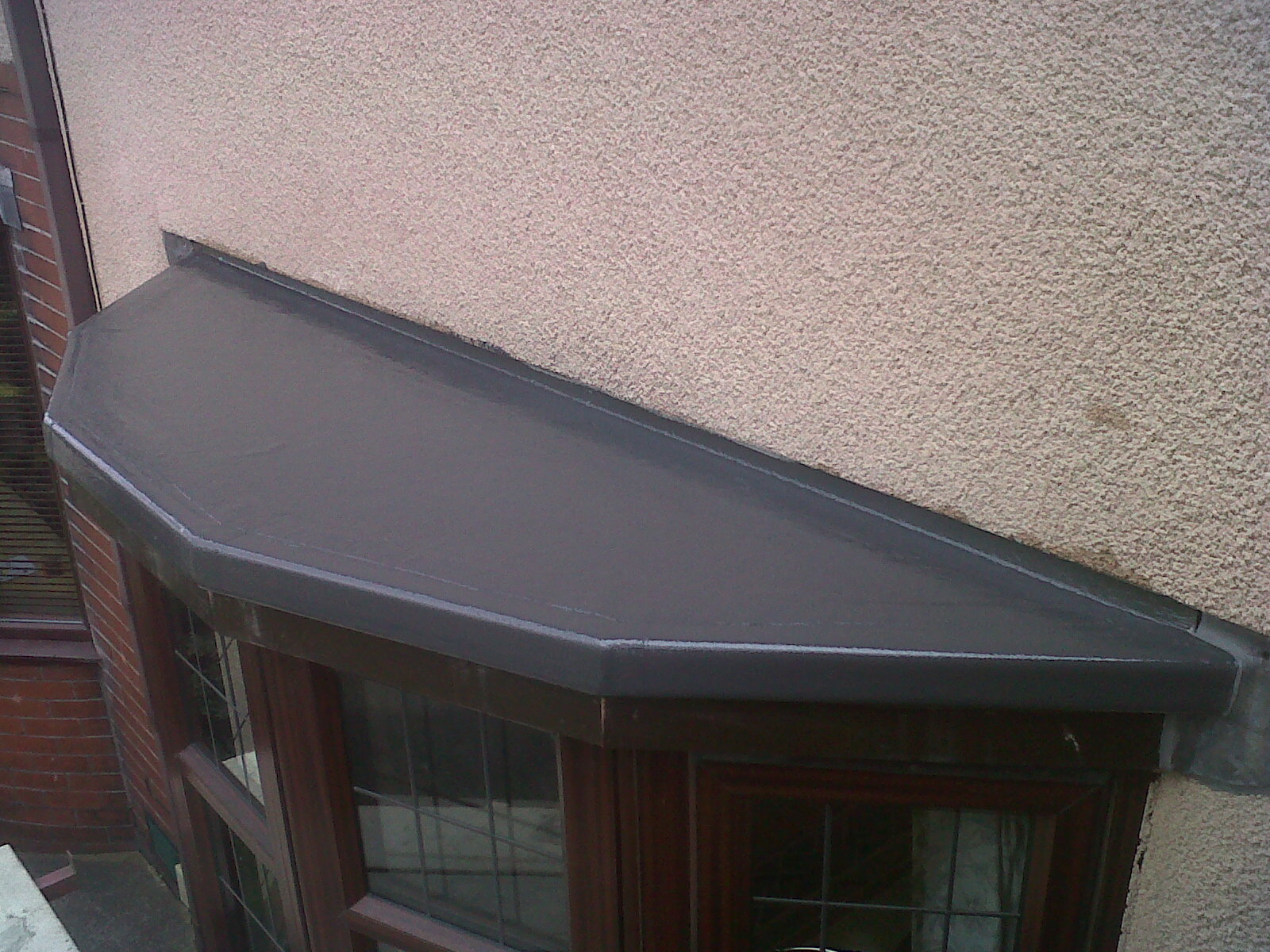
Properties
EPDM membranes remain flexible at temperatures as low as -40°C and are resistant to UV radiation without surface coating. Installed systems have demonstrated lifespans of 30–40 years in temperate climates when correctly installed. Seams are bonded with contact adhesive or tape — not torch-applied — making installation less hazardous than bitumen torch-on systems.
Limitations in Polish practice
EPDM is less familiar to many Polish roofing contractors than bitumen systems, which means incorrect seaming is a documented issue. The adhesive bond at seams must be made on clean, dry surfaces — a condition that is difficult to guarantee during installation in variable spring or autumn weather. Partially adhered systems (ballasted with gravel) are common but require adequate structural capacity for the gravel layer.
PVC Membrane Systems
PVC (polyvinyl chloride) single-ply membranes are widely used in commercial roofing in Poland and have entered residential flat roofing, particularly for garage roofs, terraces, and extensions. PVC membranes are typically hot-air welded at seams, creating a continuous waterproof layer.
Advantages
- Hot-air welded seams are structurally stronger than adhesive-bonded seams
- Available in a range of colours, including white — which reduces thermal gain on south-facing roofs
- Compatible with direct UV exposure without additional coating
Limitations
PVC membranes are sensitive to contact with bituminous materials — they must be separated from bitumen-containing substrates by a suitable separation layer, typically a polyester fleece. Plasticiser migration causes PVC membranes to become brittle over time, particularly in older formulations; modern membranes use more stable plasticiser systems.
Drainage Design — A Key Variable
Regardless of membrane type, drainage design is the single most important determinant of flat roof longevity in Poland. Polish construction standard PN-EN 12056-3 covers gravity drainage design for roofs. Flat roofs must not be truly flat — a minimum fall of 1.5–2% is required to direct water towards drainage outlets.
Common drainage failures observed in Polish residential flat roofs include:
- Blocked internal drains (wpusty dachowe) — particularly relevant in autumn when leaf debris accumulates
- Insufficient number of outlets for roof area, leading to ponding during heavy rain
- Ice formation at drainage outlets in winter, preventing meltwater from clearing
- Parapet walls that settle and create reverse falls, pooling water against the wall-roof junction